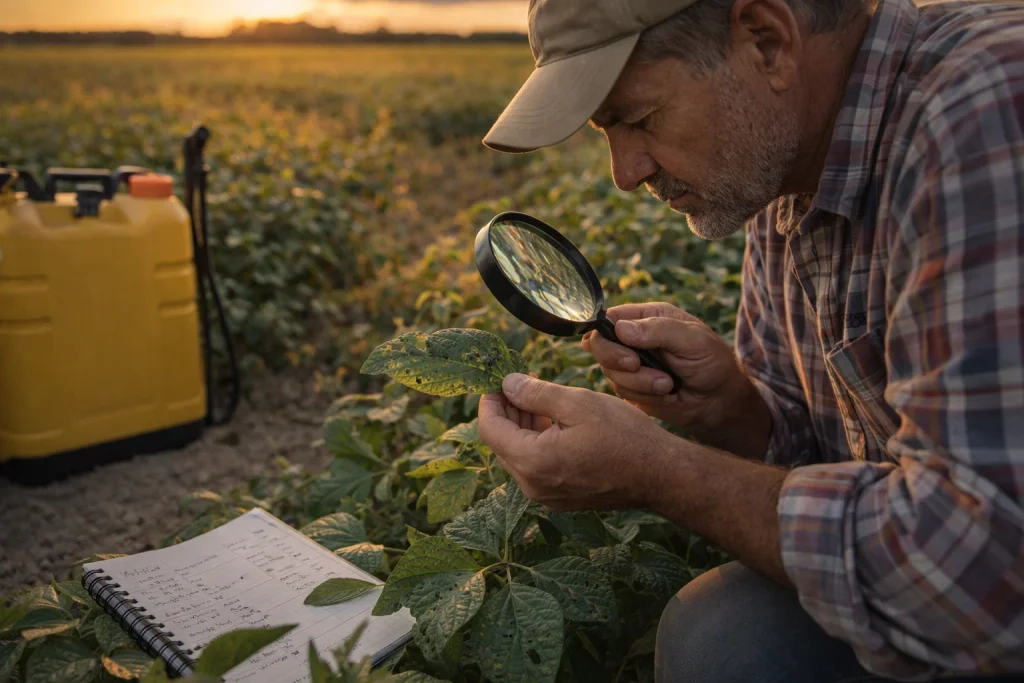
How to Detect Insect Infestations Early in Crops Before They Turn Into a Major Problem?
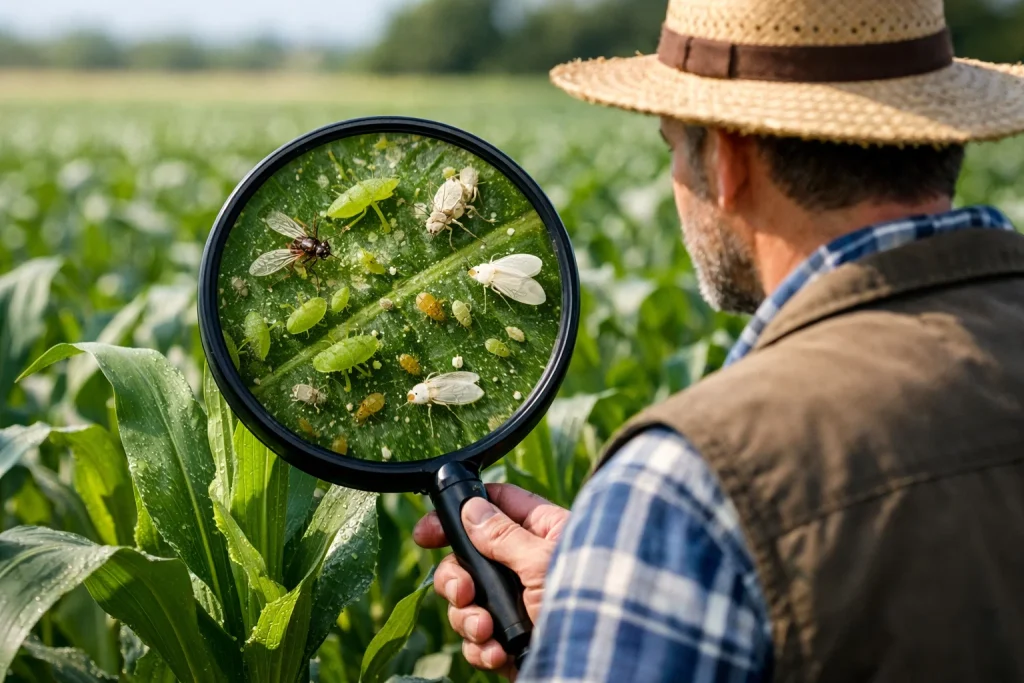
In many cases, farmers discover the infestation only after the pest has already spread throughout the field. At this stage, controlling the pest becomes more difficult. Early inspection of plants helps prevent this situation and gives farmers the opportunity to intervene at the right time.
First: Why Is Early Detection of Insect Infestation Important?
Detecting the infestation in its early stages gives farmers a better chance to control the pest before its population increases within the field.
When pests are detected early, it becomes possible to:
- Reduce the spread of infestation within the cultivated area
- Lower the number of agricultural treatments required for control
- Decrease the likelihood of pests developing resistance to pesticides
- Protect the plant from losing a significant portion of its growth
At this stage, it is useful to learn about the major insect pests that affect agricultural crops and how to control them so farmers can identify the type of insect they are dealing with.
Second: Early Signs of Insect Pests
In many cases, the insect itself may not be clearly visible on the plant, but the effects of its activity can be noticed on leaves or stems.
Some of the most common early signs include:
- Unusual yellowing of some leaves
- Small spots or discoloration on the plant surface
- Curling or twisting of leaves
- Small holes in leaves
- Sticky secretions on the plant
These symptoms often indicate the presence of sap-sucking or chewing insects in the crop. When these signs appear, it becomes important to understand how to choose the right pesticide according to the type of pest in order to apply the most effective control method.
Third: The Proper Way to Inspect Plants in the Field
Regular inspection of plants is the best way to detect infestations early.
The inspection process should be organized and include:
1️⃣ Checking the underside of leaves
2️⃣ Looking for insect eggs or tiny moving insects
3️⃣ Inspecting the growing tips of the plant
4️⃣ Observing leaves close to the soil surface
5️⃣ Noticing the pattern of infestation spread within the field
Sometimes insect infestation symptoms may resemble plant diseases. Therefore, it is important to understand the difference between insect and fungal infections before making a pest control decision.
Fourth: When Does Observation Become a Control Decision?
Finding a single insect in the field does not necessarily mean that spraying should begin immediately. The control decision depends on several factors, such as:
- The percentage of infestation spread
- The reproduction speed of the pest
- The plant growth stage
- The impact on crop growth
When the infestation begins to exceed the acceptable economic threshold, intervention becomes necessary. At this stage, it is important to understand when to use insecticide in order to make the decision at the right time.
Fifth: Common Mistakes in Detecting Insect Infestations
Some mistakes may cause farmers to detect infestations too late, including:
- Not inspecting plants regularly
- Relying only on the general appearance of the plant
- Ignoring early warning signs on leaves
- Confusing insect damage with plant diseases
In some cases, pesticides are used without proper diagnosis, which may later lead to the issue of why insecticides fail despite regular use, even when effective products are applied.
Sixth: The Role of Early Detection in Successful Pest Management
Early detection helps build a more efficient pest management system in the field. Instead of relying on repeated spraying, treatments can be incorporated into an integrated pest management program for crops that depends on proper diagnosis and continuous monitoring.
This approach helps reduce the number of spray applications and maintain pesticide effectiveness for a longer period.
Conclusion
Early detection of insect infestations is one of the most important factors in successful pest management in agricultural crops. Regular inspection of plants and attention to early warning signs help farmers intervene at the right time before pests spread throughout the field.
Effective pest control does not begin when the problem becomes obvious—it begins with the ability to detect it in its early stages.
The earlier the detection, the easier the control, and the lower the crop losses.