Specialized Fertilizers by Agricultural Problem: How to Choose the Right Solution

Many farming operations face visible problems in the field such as weak growth, nutrient deficiencies, or declining yields. The common reaction is often to increase fertilizer rates. In reality, most of these problems are not solved by applying more fertilizer, but by changing the type of intervention. This is where the true role of specialized fertilizers becomes clear. They are designed to address specific agricultural problems rather than relying on general solutions that may not suit the condition of the plant or the soil.
Why Are Not All Problems Solved by Increasing Fertilizer Rates?
Increasing fertilizer application does not necessarily lead to better crop performance. In many cases, the issue is related to poor nutrient uptake, incorrect timing, or the plant’s growth stage rather than a true nutrient shortage. Continuous reliance on traditional fertilizers under these conditions may cause plant stress or nutrient accumulation in the soil without real benefit.
Specialized Fertilizers for Nutrient Deficiency Problems
Nutrient deficiencies are among the most common agricultural problems, whether involving major or micronutrients. It is important to distinguish between a true deficiency and poor nutrient availability caused by soil conditions or pH imbalance. In such cases, specialized fertilizers provide a more precise solution than simply increasing traditional fertilizer rates.
Specialized fertilizers are used here to:
- Correct actual nutrient deficiencies
- Improve nutrient availability and uptake
- Support plant nutrition without disrupting balance
Specialized Fertilizers for Poor Flowering or Fruit Set
Weak flowering or flower drop directly affects final yield. This problem is often not caused by insufficient fertilizer, but by nutritional imbalance during a sensitive growth stage. Timely, targeted intervention with specialized fertilizers can significantly improve plant response compared to late adjustments to the base fertilization program.
Specialized fertilizers in this case are used to:
- Support the flowering process
- Improve fruit set percentage
- Reduce the impact of stress
Specialized Fertilizers for Environmental Stress Conditions
Environmental stresses such as high temperatures, water shortage, or salinity directly affect root activity and nutrient uptake. Relying solely on traditional fertilizers under these conditions is often ineffective. Specialized fertilizers help support plant resilience and reduce the negative effects of stress.
In these situations, specialized fertilizers are used to:
- Support nutritional balance
- Reduce stress effects
- Help plants maintain growth under adverse conditions
Specialized Fertilizers for Poor Nutrient Uptake
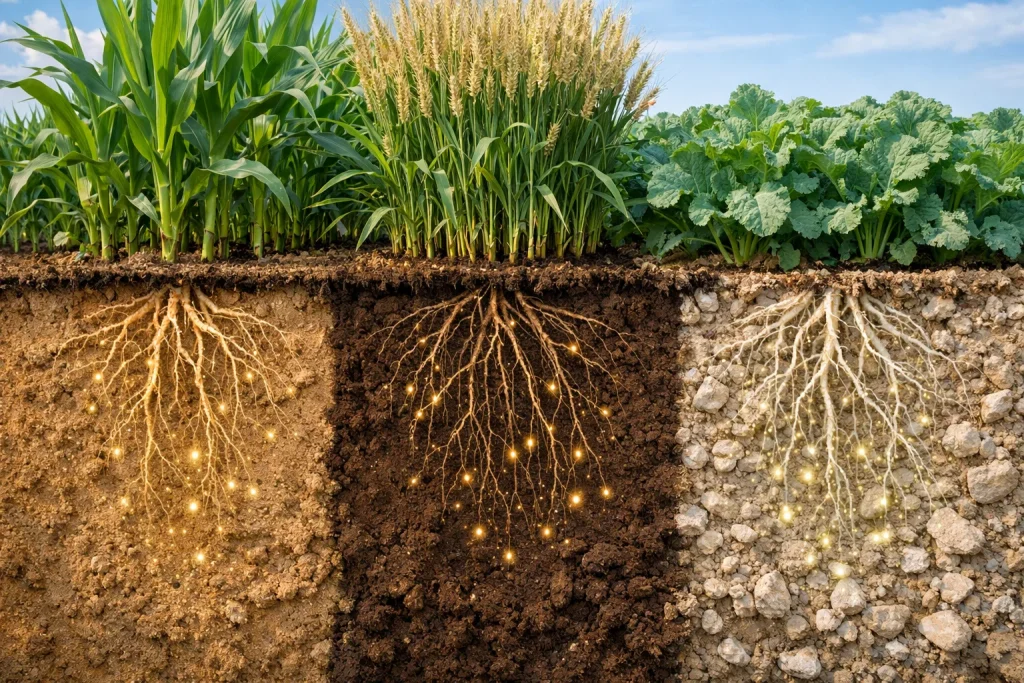
In some cases, nutrients may be present in the soil, but plants are unable to absorb them due to soil structure or pH-related issues. Increasing fertilizer rates in these situations is usually ineffective. The solution lies in using specialized fertilizers that improve nutrient mobility and availability within the soil.
Common Mistakes When Dealing with Agricultural Problems
Some of the most common mistakes include:
- Treating symptoms instead of addressing the root cause
- Increasing application rates without proper diagnosis
- Ignoring soil type and growth stage
- Relying solely on trial and error without analysis
These mistakes often result in weak outcomes and higher costs without meaningful improvement.
How to Choose the Right Specialized Fertilizer for Each Problem
Making the right choice begins with accurate problem identification, followed by understanding the crop’s growth stage and soil conditions. Specialized fertilizers should be used as targeted solutions to specific problems, not as permanent replacements for the core fertilization program.
The Relationship Between Agricultural Problems and the Complete Fertilization Program
A balanced fertilization program relies on traditional fertilizers to provide general nutrition, while specialized fertilizers are applied as precise tools to address specific issues when they arise. This integration improves results, reduces waste, and ensures greater stability in crop production.
Conclusion
There is no single solution for all agricultural problems. Proper diagnosis is the first and most important step before selecting any fertilizer. Using specialized fertilizers at the right time and in the right context allows growers to address problems effectively and achieve better results without unnecessary stress or resource waste.