Specialized Fertilizers According to Soil Type
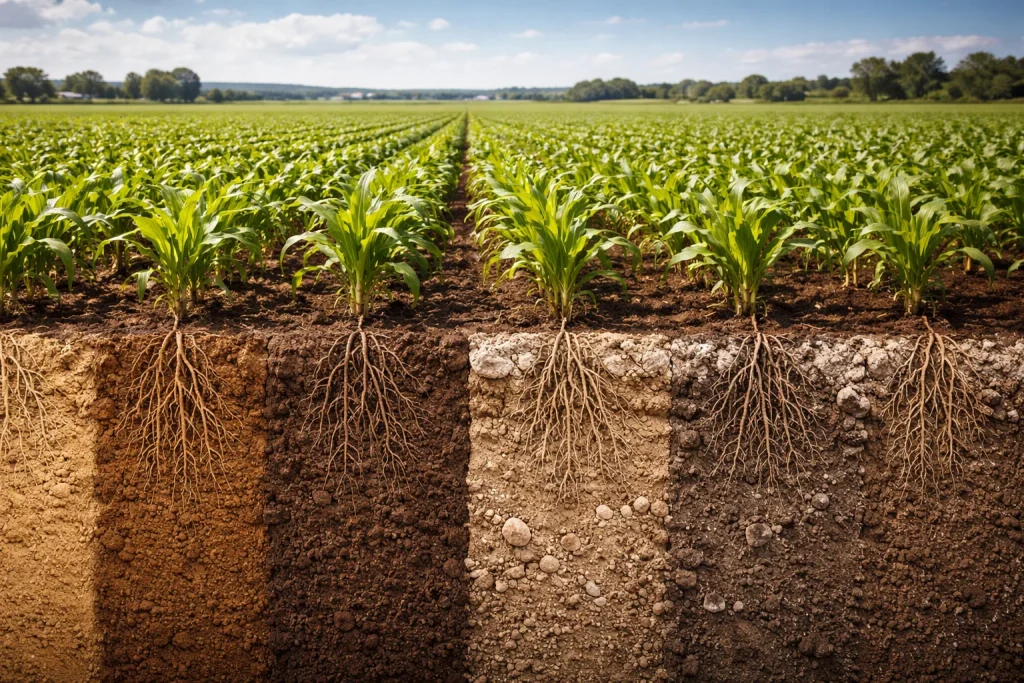
Many cases of weak plant growth or nutrient deficiency are not caused by the fertilizer itself, but rather by its incompatibility with soil characteristics. This is where the real role of specialized fertilizers appears. They are designed to address specific soil conditions and improve nutrient uptake efficiency instead of relying on general solutions.
Why Does Fertilizer Performance Differ According to Soil Type?
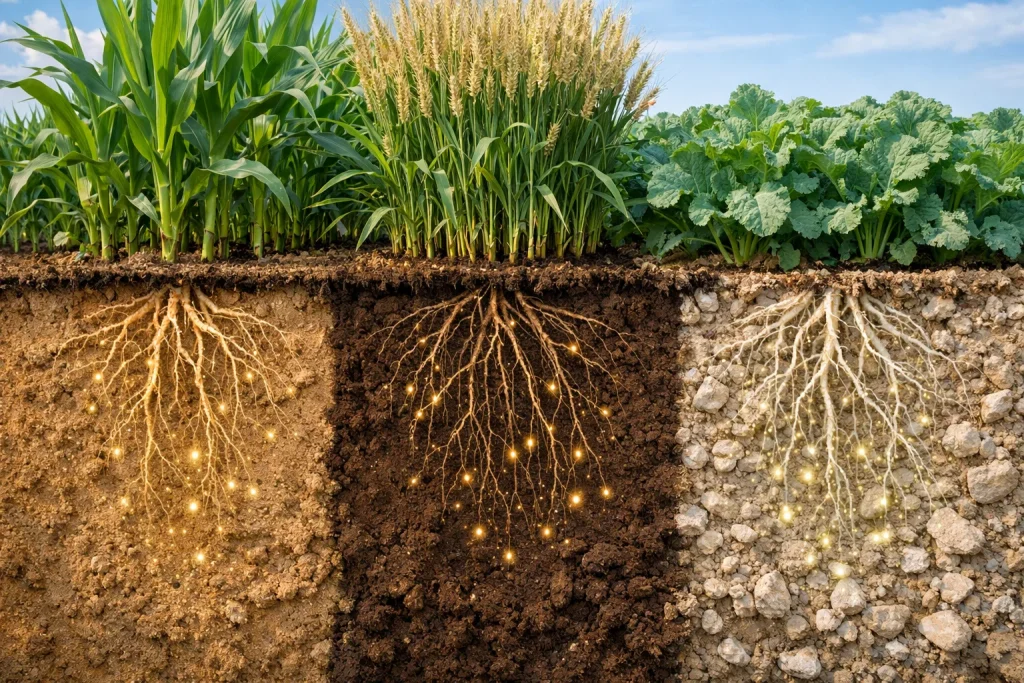
Soil is not a uniform environment. It differs in several key aspects, including:
- Texture (sandy, clay, or mixed)
- pH level
- Water and nutrient retention capacity
- Movement of nutrients within the soil
For this reason, the same fertilizer may deliver excellent results in one field and weak results in another. Specialized fertilizers were developed to work with these differences rather than ignore them.
Specialized Fertilizers for Sandy Soils
Sandy soils suffer from rapid nutrient loss and weak water retention. Using traditional fertilizers alone often fails to provide stable results.
Specialized fertilizers suitable for sandy soils focus on:
- Improving nutrient uptake efficiency
- Reducing nutrient loss
- Supporting root development under relatively dry conditions
In such cases, targeted intervention is more effective than simply increasing traditional fertilizer rates.
Specialized Fertilizers for Clay Soils
Although clay soils are rich in nutrients, their main problem lies in nutrient fixation and poor aeration. Nutrients may be present, but plants are unable to absorb them effectively.
In these conditions, specialized fertilizers are used to:
- Improve nutrient movement within the soil
- Enhance root absorption
- Reduce the negative effects of excessive soil compaction
Specialized Fertilizers for Calcareous Soils
Calcareous soils are characterized by high pH levels, which lead to the fixation of micronutrients such as iron and zinc.
The role of specialized fertilizers in these soils includes:
- Making nutrients more available for absorption
- Reducing the effects of alkalinity
- Supporting plants without causing nutritional imbalance
This type of soil does not respond well to general solutions and requires precise, well-planned intervention.
Specialized Fertilizers for Salt-Affected Soils
Salinity is one of the most stressful conditions for plants, as it directly affects roots and their ability to absorb nutrients.
In such cases, specialized fertilizers are used to:
- Reduce the effects of salt stress
- Support nutritional balance
- Improve soil condition over the medium term
Relying solely on traditional fertilizers under these conditions is often insufficient.
How to Choose the Right Specialized Fertilizer for Your Soil
Making the right choice depends on several factors:
- Soil type
- The visible problem
- Growth stage
- The goal of application
The basic rule is that specialized fertilizers should be used as targeted solutions, not as permanent replacements for the core fertilization program.
Common Mistakes When Choosing Fertilizers Based on Soil Type
Some of the most common mistakes include:
- Using the same fertilizer for all fields
- Ignoring soil analysis
- Increasing application rates instead of changing fertilizer type
- Relying solely on trial and error without understanding soil properties
These mistakes often lead to poor results and higher costs.
The Relationship Between Soil Type and the Complete Fertilization Program
Soil type is the foundation upon which any fertilization program is built. Traditional fertilizers provide general nutrition, while specialized fertilizers support soil and plants at specific points of weakness, resulting in better balance and higher productivity.
For example, in sandy soils with poor nutrient retention, specialized products help improve uptake efficiency and reduce losses. In clay soils, solutions focus on enhancing nutrient movement and absorption despite soil compaction. In calcareous soils, products that address micronutrient fixation play a key role, while salt-affected soils benefit from solutions that reduce stress and improve nutritional balance.
Conclusion
There is no single fertilizer suitable for all soil types. A clear understanding of soil characteristics is the first step toward choosing the right specialized fertilizer and achieving maximum benefit from the fertilization program without waste or plant stress.