How to Choose the Right Pesticide According to the Type of Pest?

Choosing the right pesticide is not just a quick decision made in the field; it is a fundamental step in the success of the entire pest control program. In many cases, weak results are not caused by the product’s quality, but by using a pesticide that does not match the type of pest or the stage of infestation.
The problem is that some farmers select pesticides based on previous experience or general recommendations, without linking the decision to the nature of the pest itself. This is where mistakes begin—mistakes that may later lead to what is known as insecticide failure.
First: Why Is Choosing the Right Pesticide a Critical Step?
Insecticides differ in their mode of action, which means one pesticide cannot be equally effective against all pests.
Using the wrong pesticide may lead to:
- Reduced control efficiency
- The need for repeated spraying
- Increased costs
- Faster development of pesticide resistance in pests
The correct decision starts with understanding the relationship between the type of pest and the pesticide being used.
Second: Identify the Type of Pest First
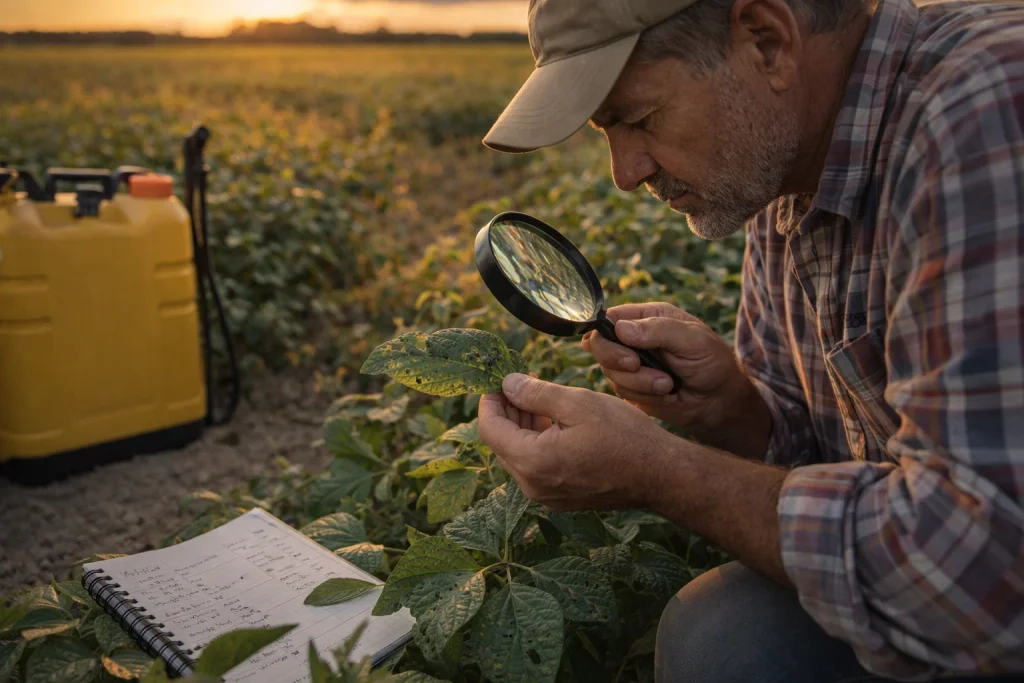
Before choosing a pesticide, the nature of the pest must be accurately identified. Agricultural insect pests are generally divided into three main categories:
Sap-sucking insects
Such as aphids and whiteflies.
These insects feed on plant sap and usually require systemic insecticides.
Chewing insects
Such as caterpillars and larvae of some insects.
These pests often require contact or stomach insecticides.
Soil-dwelling pests
Some insects attack plant roots or the base of the plant, and the control strategy differs in these cases.
In many situations, insect pests are confused with plant diseases, which makes it essential to understand the difference between insect and fungal infections before selecting a pesticide.
Third: Choosing the Type of Pesticide Based on Mode of Action
After identifying the pest type, the next step is selecting the appropriate pesticide.
Systemic insecticides
These are absorbed by the plant and move within its tissues, making them effective against sap-sucking insects.
Contact insecticides
These affect insects when they come into direct contact with the product and are commonly used when infestations are visible.
Stomach insecticides
These work when the insect feeds on treated plant parts.
Understanding the different types of insecticides helps reduce the number of applications and achieve more stable results.
Fourth: Additional Factors That Influence Pesticide Selection
Choosing a pesticide does not depend only on the pest type; several other factors also play an important role:
- Plant growth stage
- Severity of infestation
- Climatic conditions
- History of previous treatments
In some situations, the better solution is to include the treatment within an integrated crop management program instead of relying on a single spray.
Fifth: When Should the Pesticide Be Changed?
If the correct pesticide is used but results remain weak, the reason may be:
- The development of pest resistance
- Improper spray timing
- A mixing or dosage problem
In such cases, the crop spraying schedule should be reviewed and the entire program evaluated before repeating the treatment.
Sixth: Common Mistakes When Choosing a Pesticide
Some mistakes frequently seen in fields include:
- Choosing a pesticide based only on price
- Using the same pesticide throughout the season
- Relying on general recommendations without proper diagnosis
- Ignoring the nature of the pest
These practices may eventually lead to what is known as insecticide failure, even when effective products are used.
Conclusion
Choosing the right pesticide is not merely an operational step; it is a strategic decision within an agricultural pest management program. Proper pest diagnosis, understanding the pesticide’s mode of action, and integrating the decision into a structured management program are all factors that ensure the best possible results with minimal intervention.
A powerful pesticide does not always guarantee success…
but the right choice is what truly makes the difference in the field.