
The Difference Between Plant Growth Regulators and Fertilizers and Their Effects on Plants
Why Do Some Farmers Confuse Growth Regulators with Fertilizers?
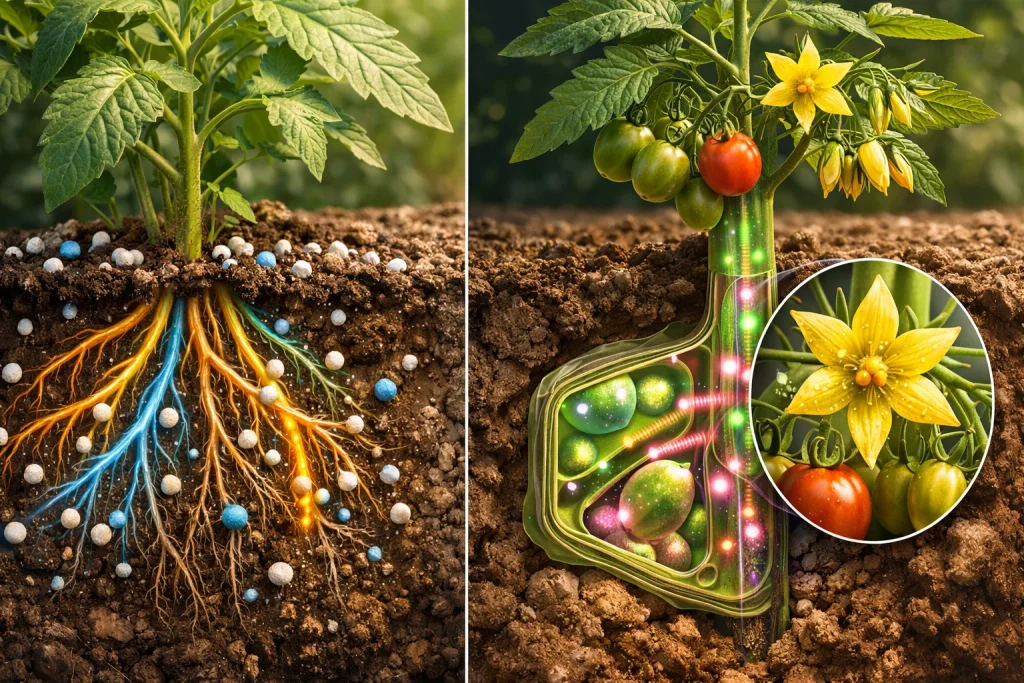
One of the common misunderstandings in agricultural practices is the belief that plant growth regulators are a type of fertilizer or that they can replace fertilization programs. This confusion often occurs because both are used to improve plant growth and increase crop production.
However, there is a fundamental difference between the two in terms of their role and effect inside the plant.
Fertilizers provide the nutrients that plants need for growth, while plant growth regulators influence the physiological and hormonal processes within the plant. Understanding this difference helps farmers use each one at the right time to achieve the best possible yield.
To understand the nature of plant growth regulators more deeply, read:
What are plant growth regulators and how do they work inside the plant
What Are Fertilizers and What Is Their Role in Plants?
Agricultural fertilizers are substances that contain essential nutrients required by plants to complete their life cycle properly.
The most important nutrients supplied by fertilizers include:
- Nitrogen
- Phosphorus
- Potassium
- Micronutrients such as iron, zinc, and manganese
These nutrients contribute to the formation of plant tissues and support vital plant functions such as:
- Vegetative growth
- Root development
- Flower and fruit formation
Without balanced nutrition, plants cannot achieve optimal production even when plant growth regulators are used.
What Are Plant Growth Regulators?
Plant growth regulators are compounds that influence the hormonal balance within plants and control certain physiological processes such as:
- Stimulating flowering
- Increasing fruit set
- Enlarging fruit size
- Regulating vegetative growth
Unlike fertilizers, plant growth regulators do not provide nutrients. Instead, they act as hormonal signals that help direct plant energy toward specific growth processes.
To learn more about the different types and how they are used, read:
Types of plant growth regulators and the use of each in agriculture
The Main Difference Between Fertilizers and Growth Regulators
The difference between fertilizers and plant growth regulators lies mainly in their function.
Fertilizers are used to feed the plant, while plant growth regulators are used to regulate plant growth processes.
| Factor | Fertilizers | Plant Growth Regulators |
|---|---|---|
| Function | Provide plant nutrition | Regulate hormonal processes |
| Role | Supply essential nutrients | Stimulate specific physiological activities |
| Effect | Improve overall plant growth | Direct plant growth toward a specific goal |
This difference clearly shows that neither can replace the other.
When Should Fertilizers Be Used?
Fertilizers are used throughout the entire plant growth cycle to ensure proper nutrition.
Their main roles include:
- Supporting vegetative growth
- Enhancing root development
- Improving plant health
- Increasing crop productivity
A well-designed fertilization program helps plants build a strong foundation for growth and production.
When Should Plant Growth Regulators Be Used?
Plant growth regulators are applied in specific situations when the plant needs support in regulating certain growth processes.
Examples include:
- Improving flowering
- Increasing fruit set
- Enlarging fruit size
- Balancing plant growth
To learn the correct timing for applying plant growth regulators during plant development stages, read:
When to use plant growth regulators: the correct timing for each stage
Can Fertilizers and Growth Regulators Be Used Together?
In practice, the best agricultural results are achieved when fertilizers and plant growth regulators are used together in a balanced management program.
Fertilizers provide the nutrients required for plant growth, while growth regulators help direct plant energy toward key processes such as flowering or fruit enlargement.
However, both should be applied at the correct time and in the proper dosage.
To learn the correct application methods for plant growth regulators, read:
How to use plant growth regulators correctly (dosage and application methods)
Common Mistakes When Confusing Fertilizers with Growth Regulators
Some farmers attempt to compensate for poor nutrition by using plant growth regulators, which can lead to weak results.
Common mistakes include:
- Using growth regulators instead of proper fertilization programs
- Increasing dosage to achieve faster results
- Applying growth regulators at the wrong time
To avoid these mistakes, read:
Common mistakes in using plant growth regulators and how to avoid them
Conclusion
Fertilizers and plant growth regulators serve different but complementary roles in agricultural systems.
Fertilizers provide the nutrients necessary for plant growth, while plant growth regulators influence physiological processes to achieve specific goals such as improving fruit set or enlarging fruits.
Using both correctly helps achieve optimal crop productivity.

