How to Choose the Right Fertilizer for Your Soil Type? A Practical Guide for Farmers
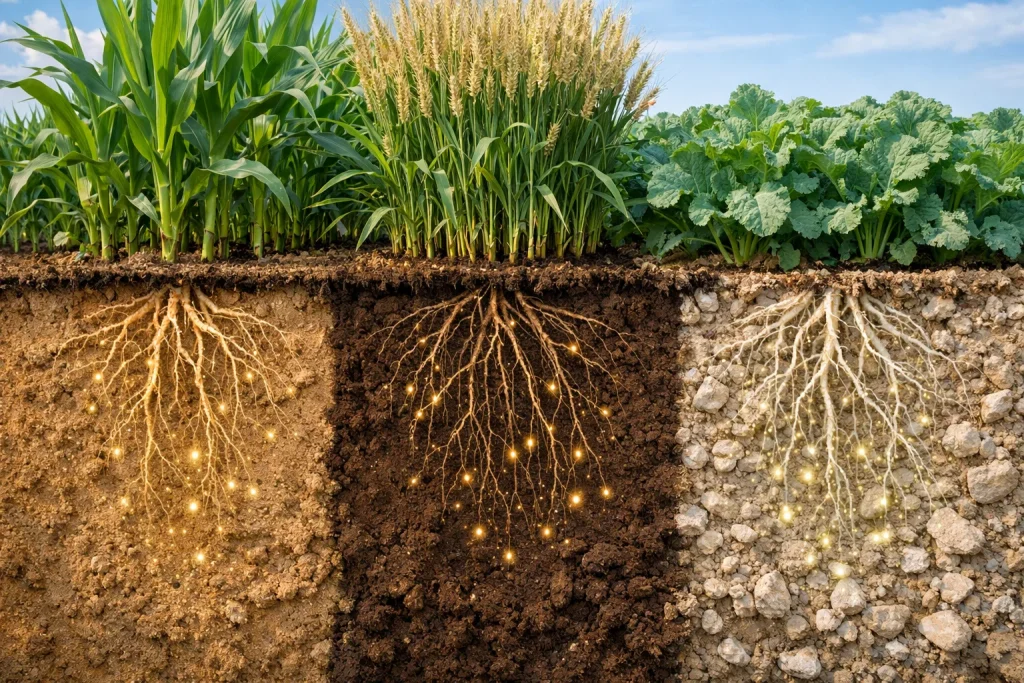
Using the wrong fertilizer can waste an entire growing season—even if the product itself is high quality. In most cases, the issue is not the fertilizer, but its incompatibility with the soil type.
In this practical guide, you’ll learn how to identify your soil type, choose the most suitable fertilizer for it, and avoid common mistakes that reduce nutrient uptake and increase costs.
Why Soil Type Is the Key Factor in Fertilization
Soil is the medium that delivers nutrients to the plant.
When fertilizer is not compatible with soil characteristics, nutrients may:
- Leach away
- Become chemically fixed
- Transform into forms unavailable to plants
This is why many farmers say:
“I used a good fertilizer, but saw no results.”
Common Soil Types
- Sandy soil
- Clay soil
- Calcareous (lime-rich) soil
- Mixed soils
Each type interacts differently with nutrients and fertilizers.
Fertilization Strategies for Sandy Soil
Characteristics of Sandy Soil
- Very high drainage
- Low water and nutrient retention
- Fast nutrient loss
Main Challenge
Nutrients are washed out before plants can absorb them.
Effective Agricultural Solutions
- Use:
- Liquid fertilizers
- Split applications at shorter intervals
- Support soil with:
- Soil conditioners
- Organic or water-retention enhancers
Common Mistakes
- Applying large doses at once
- Relying only on soil-applied fertilizers
Fertilization Strategies for Clay Soil
Characteristics of Clay Soil
- High water retention
- Poor aeration
- Tendency to bind nutrients
Main Challenge
Nutrients exist in the soil but are not available to plants.
Recommended Approach
- Use:
- Fast-uptake fertilizers
- Foliar feeding during critical growth stages
- Improve soil structure by:
- Adding soil conditioners
- Managing irrigation carefully
Important Note
Increasing fertilizer rates in clay soils often worsens the problem rather than solving it.
Fertilization in Calcareous (Alkaline) Soils
Characteristics of Calcareous Soils
- High pH levels
- Strong fixation of micronutrients
- Nutrient deficiency symptoms despite nutrient presence
Common Symptoms
- Leaf yellowing (chlorosis)
- Weak vegetative growth
- Flower drop
Effective Solutions
- Use:
- Chelated micronutrients
- Foliar fertilizers
- Reduce reliance on soil application alone
When Do You Need a Soil Conditioner?
Clear Indicators
- Poor fertilizer response
- Repeated nutrient deficiency symptoms
- Weak plant reaction despite regular fertilization
Role of Soil Conditioners
- Improve soil structure
- Enhance nutrient availability
- Reduce fertilizer loss
Common Fertilizer Selection Mistakes
- Choosing fertilizer based on name rather than function
- Ignoring soil type
- Random fertilizer mixing
- Increasing dosage to compensate for poor results
All these issues come down to one core mistake:
Fertilization decisions made without understanding soil behavior.
Conclusion
The right fertilizer is not the most expensive or the most popular—it is the one that:
- Matches your soil type
- Is applied at the correct time
- Uses the appropriate application method
Understanding your soil is the foundation of any successful fertilization program. Once soil behavior is clear, product selection becomes easier, more precise, and far more effective.